Oct 8, 2014


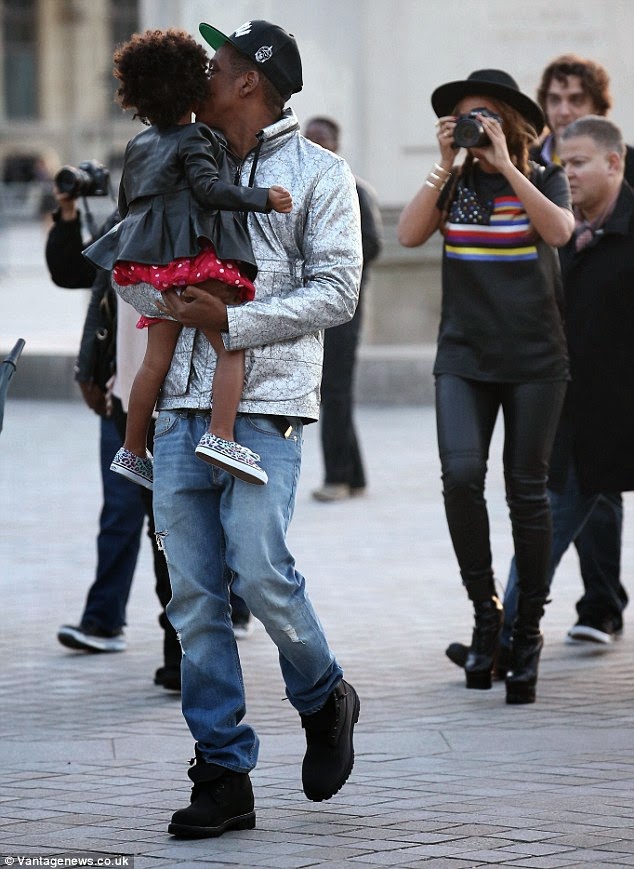


The world's Most Beautiful First Ladies


Oct 7, 2014
House on fire
Question of the day.
Imagine This!
Your House Is Burning And You Have The Opportunity To Pick Only One Thing, What Would You pick? [See List]
1. 50Million Pounds Cash Under The Bed.
2. Your Mum
3. Your 5 Years Old Son
4. Your Certificates
5. Your Wife/Husband
6. Your Bible/Quran
Choose One.
Imagine This!
Your House Is Burning And You Have The Opportunity To Pick Only One Thing, What Would You pick? [See List]
1. 50Million Pounds Cash Under The Bed.
2. Your Mum
3. Your 5 Years Old Son
4. Your Certificates
5. Your Wife/Husband
6. Your Bible/Quran
Choose One.
Somalia's first cash machine opens in Mogadishu

Somalia's first-ever cash withdrawal machine has been installed in the capital, Mogadishu.
Some people are confused about how the machine works because
they have never used one before, reports the BBC's Mohamed Moalimu from
the city. The machine, installed by Salaam Somali Bank in an upmarket hotel, allows customers to withdraw US dollars.
Somalia has a rudimentary banking sector, with many people relying on remittances from abroad.
Its development has been thwarted by more than two decades of conflict involving clan and religious-based militia groups.
'Big step forward' Somali's currency, the shilling, is almost worthless and many businessmen and foreigners deal in dollars.
 Mogadishu has been hit by instability for more than two decades and the Somali shilling is almost worthless
 African Union troops are trying to restore order across Somalia
A spokesman for Salaam Somali Bank, Said Abukar, said people can only withdraw US dollars.
"We may add other international currencies in the future. People from the diaspora and foreigners have welcomed the move with enthusiasm. We are planning to install more ATMs in Mogadishu," he told the BBC.
Omar Hassan, a visitor from the UK, said the installation of the machine was a "big step forward" for Somalia.
"I have been staying in Mogadishu for longer than I originally planned so I ran out of cash. I couldn't believe my luck when I heard about the new cash machine," he told the BBC, as he stood in the queue to withdraw cash.
Ebola outbreak: Spain investigates new case
Three other people, including the nurse's husband, have been quarantined.
The European Commission has asked Spain to explain how the nurse could have become infected.
Some 3,400 people have died in the outbreak - mostly in West Africa.
The Spanish auxiliary nurse, a 40-year-old woman who has not been named, was one of about 30 staff at the Carlos III hospital in Madrid who had been treating priests Manuel Garcia Viejo and Miguel Pajares, officials say.
Mr Garcia Viejo, 69, died at the hospital on 25 September after catching Ebola in Sierra Leone. Mr Pajares, 75, died in August after contracting the virus in Liberia.
 The nurse was moved to Carlos III hospital in Madrid in the early hours of Tuesday
 Staff staged a protest outside La Paz Hospital in Madrid over the government's handling of the Ebola cases
Madrid healthcare director Antonia Alemany told reporters that according to the information available: "The nurse went into the room wearing the individual protection gear and there's no knowledge of an accidental exposure to risk."
Shortly afterwards the nurse went on holiday, a hospital spokesman said, but fell ill on 30 September and was admitted to Alcorcon hospital in south-west Madrid on Sunday after being tested positive for Ebola.
Early on Tuesday she was moved under police escort to Carlos III hospital in the capital and is said to be in a stable condition.
The Spanish health authorities say she is being treated with a drip using antibodies from previous Ebola patients.
Her husband and a second nurse who treated the missionary are now in quarantine, officials said, as well as a man who recently arrived on a flight from Nigeria.

The transexual wife who was murdered & cooked by her husband


After killing and cooking his wife who once advertised herself as a high-class transsexual escort, Marcus slit his own throat as he fled from police.


Nobody knows why he killed his wife but according to his family, he had no history of mental illness or doesn't have a violent record.
..


Marcus
Oct 3, 2014
DNM Music returns

After thier Previous single, Kpubem Ogodo which featured Be-Light, G-teck (Zicky and Sparkinz) are now back with an amazing dope Freestyle titled ”Ohh Mpa”produced by Dj-zicky.
Its a nice song with good igbo rap. These Guys really got Talent and are going to create a great impact in the Entertainment industry. Download from the link https://wp.me/p4qfnl-9G


Aids: Origin of pandemic 'was 1920s Kinshasa'
 Kinshasa, pictured in 1955, was at the centre of the
pandemic, scientists say
The origin of the Aids pandemic has
been traced to the 1920s in the city of Kinshasa, in what is now the Democratic
Republic of Congo, scientists say.
An international team of scientists say a "perfect storm" of population growth, sex and railways allowed HIV to spread.
A feat of viral archaeology was used to find the pandemic's origin, the team report in the journal Science.
They used archived samples of HIV's genetic code to trace its source, with evidence pointing to 1920s Kinshasa.
Their report says a roaring sex trade, rapid population growth and unsterilised needles used in health clinics probably spread the virus.
Meanwhile Belgium-backed railways had one million people flowing through the city each year, taking the virus to neighbouring regions.
Experts said it was a fascinating insight into the start of the pandemic.
HIV came to global attention in the 1980s and has infected nearly 75 million people.
It has a much longer history in Africa, but where the pandemic started has remained the source of considerable debate.
Family affair
A team at the University of Oxford and the University of Leuven, in Belgium, tried to reconstruct HIV's "family tree" and find out where its oldest ancestors came from.
The research group analysed mutations in HIV's genetic code.
"You can see the footprints of history in today's genomes, it has left a record, a mutation mark in the HIV genome that can't be eradicated," Prof Oliver Pybus from the University of Oxford told the BBC.
By reading those mutational marks, the research team rebuilt the family tree and traced its roots.

HIV is a mutated version of a chimpanzee virus, known as simian immunodeficiency virus, which probably made the species-jump through contact with infected blood while handling bush meat.
The virus made the jump on multiple occasions. One event led to HIV-1 subgroup O which affects tens of thousands in Cameroon.
Yet only one cross-species jump, HIV-1 subgroup M, went on to infect millions of people across every country in the world.
The answer to why this happened lies in the era of black and white film and the tail-end of the European empires.
In the 1920s, Kinshasa (called Leopoldville until 1966) was part of the Belgian Congo.
Prof Oliver Pybus said: "It was a very large and very rapidly growing area and colonial medical records show there was a high incidence of various sexually transmitted diseases."
Sex and railways
Large numbers of male labourers were drawn to the city, distorting the gender balance until men outnumbered women two to one, eventually leading to a roaring sex trade.
Prof Pybus added: "There are two aspects of infrastructure that could have helped.
"Public health campaigns to treat people for various infectious diseases with injections seem a plausible route [for spreading the virus].
"The second really interesting aspect is the transport networks that enabled people to move round a huge country."
Around one million people were using Kinshasa's railways by the end of the 1940s.
The virus spread, with neighbouring Brazzaville and the mining province, Katanga, rapidly hit.
Those "perfect storm" conditions lasted just a few decades in Kinshasa, but by the time they ended the virus was already starting to spread around the world.
 The human immunodeficiency virus (HIV) attacks the
immune system
Prof Jonathan Ball, from the University of Nottingham, told the BBC: "It's a fascinating insight into the early phases of the HIV-1 pandemic.
"It's the usual suspects that are most likely to have helped the virus get a foothold in humans - travel, population increases and human practices such as unsafe healthcare interventions and prostitution.
"Perhaps the most contentious suggestion is that the spread of the M-group viruses had more to do with the conditions being right than it had to do with these viruses being better adapted for transmission and growth in humans. I'm sure this suggestion will prompt interesting and lively debate within the field."
Dr Andrew Freedman, a reader in infectious diseases at Cardiff University, said: "It does seem an interesting study demonstrating very elegantly how HIV spread in the Congo region long before the Aids epidemic was recognised in the early 80s.
"It was already known that HIV in humans arose by cross species transmission from chimpanzees in that region of Africa, but this study maps in great detail the spread of the virus from Kinshasa, it was fascinating to read."
Canada to join anti-Islamic State air strikes
Canada has said it will join the US-led campaign of air
strikes against Islamic State (IS) militants in Iraq for up to six months, but
will not deploy ground troops.
A motion put forward by the country's Conservative government is expected to pass on Monday in the House of Commons.
The mission will include CF-18 fighter jets, as well as refuelling and surveillance aircraft.
PM Stephen Harper said it was intended to "significantly degrade" IS.
Canada has more than two dozen military advisers already in Iraq.
Barcelona star Lionel Messi to face tax evasion trial
 Lionel Messi at a news conference in Barcelona on
Thursday
Barcelona and Argentina star Lionel
Messi is to face trial for alleged tax evasion, a Spanish judge has ruled.
The judge rejected a prosecution recommendation to drop the charges on the grounds the player's father was responsible for his finances.
Messi and his father Jorge are accused of defrauding the authorities of more than 4m euros (£3.1m; $5m).
The pair, who deny wrongdoing, have five days to appeal against the ruling.
It is alleged that they withheld the money between 2007 and 2009.
The income related to Messi's image rights, including contracts with Banco Sabadell, Danone, Adidas, Pepsi-Cola, Proctor and Gamble, and the Kuwait Food Company.
 Messi and his father paid 5m euros back to the
Spanish tax authorities
The footballer and his father are suspected of avoiding paying Spanish tax by using companies in Belize and Uruguay to sell the rights to use Messi's image.
The judge ruled: "In this type of crime, it is not necessary for someone to have complete knowledge of all the accounting and business operations nor the exact quantity, rather it is sufficient to be aware of the designs to commit fraud and consent to them."
In August 2013 Messi and his father made a 5m euro "corrective payment", equal to the alleged unpaid tax plus interest.
Messi has been four times Fifa World Player of the Year and is captain of Argentina.
The court decision comes as Barcelona grapples with a separate prominent legal case.
A Madrid court is hearing a lawsuit that accuses Barcelona of misappropriating funds from the transfer fee to buy Brazil striker Neymar from Santos in 2013.
Club president Sandro Rosell quit in January, but insisted he had "acted correctly" over the transfer.
Mali's UN troops killed in 'deadliest attack'
 More than 9,000 UN troops are currently deployed in
Mali
Nine UN peacekeepers from Niger have
been killed in an ambush while on patrol in north-east Mali.
The UN said it was the deadliest attack on its mission in Mali.
French and African troops intervened in Mali in January 2013 to stop the southern advance of Islamist militants on the capital, Bamako.
The insurgents were expelled from the northern towns they controlled but attacks have continued against the UN force deployed to help bring stability.
The 9,000-strong UN force, known as Minusma, took over peacekeeping operations in July 2013.

The UN convoy came under attack from heavily armed gunmen on motorbikes between the north-eastern desert towns of Menaka and Ansongo, Minusma spokesman Olivier Salgado told the Reuters news agency.
Minusma has not said who was responsible, but a UN officer from Niger told the AFP news agency that it was carried out by the Movement for Oneness and Jihad in West Africa (Mujao), an al-Qaeda-linked Islamist militia.
Mali descended into conflict after a coup in 2012 prompted by concerns over how to deal with a Tuareg rebellion in the country's vast northern desert region.
Al-Qaeda with its Islamist allies took advantage of the subsequent chaos to seize the north, sidelining the Tuaregs.
Since the UN troops deployed, presidential polls have been held and the Tuareg community is now among several groups attending on-off peace talks in Algeria to settle issues of how the north should be governed.
US cameraman in Liberia diagnosed with Ebola
 More than 3,330 people have died in Africa from the
deadly Ebola outbreak
A cameraman working in Liberia has
tested positive for Ebola and is to be flown home to the US for treatment.
The 33-year-old freelancer has been working in the country for three years for a number of media outlets, most recently NBC News.
More than 3,330 people have died in four West African countries in what has become the world's worst outbreak.
President Barack Obama has pledged federal support to contain the spread in the US, after the first case there.
A Liberian man diagnosed in Texas on Tuesday remains in a serious condition.
The unnamed cameraman is the fourth American known to test positive for Ebola, all diagnosed in Liberia.
Three American aid workers were separately flown back to the US for treatment and they are all recovering.
The man was only hired by NBC News on Tuesday, the US broadcaster said, and he came down with symptoms - including fever and aches - the following day.
After seeking medical advice, he tested positive for the virus.
 Duncan was a driver for a courier company in
Monrovia
 Frankfurt University Hospital prepares to receive an
Ebola patient from Africa
NBC News President Deborah Turness informed staff of the news in a statement.
"We are doing everything we can to get him the best care possible. He will be flown back to the United States for treatment at a medical center that is equipped to handle Ebola patients."
The rest of the NBC crew including the network's chief medical editor, Dr Nancy Snyderman, are being flown back to the US on a private charter flight and will be placed under quarantine for 21 days, Ms Turness added.
Meanwhile, as many as 100 people in Texas are being checked for exposure to Ebola, after Thomas Eric Duncan, a Liberian national, was diagnosed with the virus in Dallas.
He flew to the US two weeks ago to visit relatives.
A number of them have been ordered to stay home while they are watched for signs of the disease.
 A pedestrian in Dallas takes precautions near the
hospital holding Mr Duncan
 Mr Duncan's relatives have to stay indoors
Dallas Mayor Mike Rawlings was called by Mr Obama on Thursday who promised to help with whatever was needed from federal resources to stop it spreading.
Mr Duncan was the first person diagnosed on US soil and on Thursday, Liberian officials said they would prosecute him for lying on an Ebola questionnaire form prior to leaving the country.
Deputy Information Minister Isaac Jackson said Mr Duncan had "lied under oath about his Ebola status".
He is alleged to have taken a sick relative to a clinic.
In West Africa. the outbreak has prompted dire warnings of economic collapse if infection rates continue.
There have been 7,178 confirmed cases in total, with Sierra Leone, Liberia and Guinea suffering the most.
Leading charity Save the Children has warned that Ebola was spreading at a "terrifying rate" in West Africa, with the number of new recorded cases doubling every few weeks.
It said that a rate of five new Ebola cases an hour in Sierra Leone meant healthcare demands were far outstripping supply.
At a conference in London co-hosted with Sierra Leone, the UK called for urgent decisive action from the international community.

- Symptoms include high fever, bleeding and central nervous system damage
- Spread by body fluids, such as blood and saliva
- Fatality rate can reach 90% - but current outbreak has mortality rate of about 70%
- Incubation period is two to 21 days
- There is no proven vaccine or cure
- Supportive care such as rehydrating patients who have diarrhoea and vomiting can help recovery
- Fruit bats, a delicacy for some West Africans, are considered to be virus's natural host
Subscribe to:
Posts (Atom)